Every road from a peptide for dogs listing runs through your dog's own vet
This is a plain-language guide for dog owners. It is not a vet, a clinic, a pharmacy or a seller. It maps the ground between an online listing and your dog, one stop at a time.
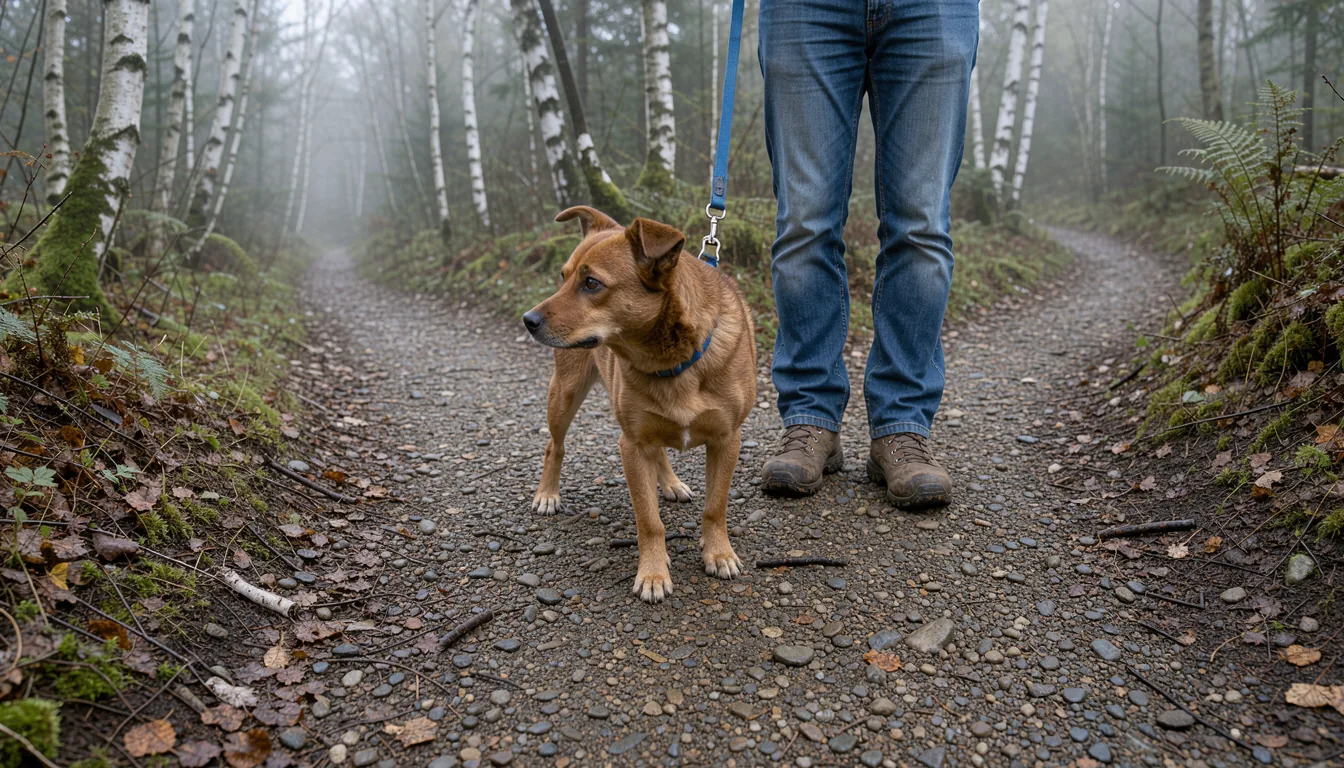
The route, stop by stop
Start with what the listing offers, then check the dog studies, the rules and the risks. These questions can help you prepare for a talk with your dog's vet.
- stop AThe listingA web page offers a peptide for dogs and promises help with joints, healing, weight or age.
- What is actually in it?
- stop BThe word itselfA peptide consists of a few tiny building blocks joined in a string. These blocks are called amino acids and also make proteins, materials in the body. Insulin is one peptide. Calling it a peptide does not establish product safety.
- Has anyone tried it in dogs?
- stop CThe dog evidenceNot one treatment study of BPC-157 or TB-500 in pet dogs surfaced in searches run in September 2026.
- May it be marketed for a dog?
- stop DThe legal lanesFDA records checked in September 2026 hold none of the online peptides as an approved animal drug.
- What could go wrong?
- stop EThe red flagsNobody outside the seller checks an unapproved animal drug, and its maker owes the FDA no reports of harm.
- Who decides?
- stop FYour dog's vetA vet who has examined your dog weighs any medicine against that dog's body, history and other drugs.
What the record shows about dogs, in three lines
- Take the four names listings use most, GHK-Cu, KPV, BPC-157 and TB-500: not one holds an FDA approval for a dog or for any other animal.
- The only BPC-157 work in dogs used healthy laboratory beagles, to track the substance and check whether it caused harm.
- A seller's line about "no side effects" means little, because makers of unapproved animal drugs owe the FDA no reports.
If your dog has already had some
Plenty of owners reach this page after the fact. That is common, and there is one clear way forward: toward the vet. The product, its label or listing, and a short note of what was given and when are what the vet will want to see.
For a medicine that seems to cause a bad reaction, FDA guidance for owners puts the vet first and the report second.
For a suspected poisoning, an emergency vet or an animal poison-control line comes first. Both poison lines are named on the red-flag route.
Sources behind this page
Read the public records and research behind this page.
- FDA: how to tell whether a drug is legally marketed for animals
- FDA: animal drugs that lack approval
- FDA: its concerns about animal drugs that skip review
- PubMed: searches for dog and cat studies of the online peptides
- PubMed: how rats and beagles handle BPC-157 (He and colleagues)
- PubMed: checking BPC-157 for harm in laboratory animals (Xu and colleagues)
- FDA: approved versus pharmacy-compounded medicines for pets